
Spine Surgery
Spine Surgery
- Minimally Invasive Spine Surgery
- Open Spine Surgery
- Endoscopic Spine Surgery
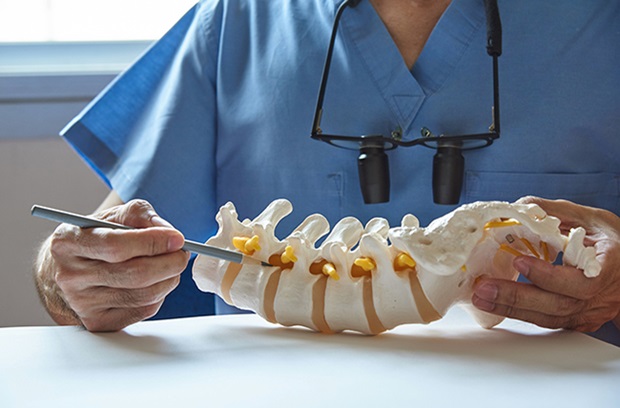
Spine treatment is must required when the symptoms of spine disorders affect daily routine life due to back pain. The treatment provided to different spine disorders depends on the patients' health, level of disorder and the status of back bone. The main purpose of spine surgery is to remove pain, restore proper nerve function and prevent unusual movement of the spine. It is essentially performed by taking out a portion of a bone or disc and then fusing the spine with a bone graft in the front or rear part of the vertebrae. The main reason for spine surgery or neck surgery is to correct an anatomical lesion in individuals who fail to show improvement with conservative treatment like icing, massage, physical therapy or anti-inflammatory drugs.
Frequently Asked Questions
Surgery is usually considered only after physiotherapy, medication, and rest fail to improve persistent or worsening pain.
Yes, spine surgery can relieve sciatica when it is caused by nerve compression that has not responded to other treatments.
Spinal fusion permanently joins the treated vertebrae, though it does not always eliminate back pain for every patient.
This varies, but many patients wear a brace for a few weeks to support healing during early recovery.
Some flexibility is reduced at the fused level, though most patients still retain good overall movement.
Yes, for suitable cases, minimally invasive techniques can be just as effective, with the added benefit of quicker recovery.
Many spine conditions do improve with physiotherapy, and surgery is generally reserved for cases that do not respond.
Most spine surgeries offer good pain relief and improved function, though results depend on the specific condition being treated.
Recovery time depends on the procedure and your job type, ranging from a few weeks to a few months.
Spine surgery carries its own set of risks, similar to any major surgery, which is why careful evaluation is done beforehand.