
Alopecia Areata
Alopecia Areata
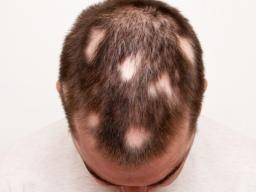
Alopecia areata is a common autoimmune disoder in which hair loss occurs in small patches. Sometimes, these patches merge & make complete loss of hair on the scalp (alopecia totalis) or in extreme cases, the entire body (alopecia universalis). It's treatment includes oral medications having potent anti-inflammatory property, local application like cream, ointment, lotions, intralesional injection, phototherapy.
Frequently Asked Questions
Alopecia areata is an autoimmune condition that causes sudden, patchy hair loss on the scalp or other areas of the body.
No, alopecia areata is a specific autoimmune condition, distinct from common pattern hair loss.
Yes, hair regrowth is possible, especially with early treatment, though results vary depending on the individual.
There can be a genetic link, and having a family history may increase the likelihood of developing the condition.
Triggers can include stress, illness, or other immune-related factors, though the exact cause is not always clear.
It depends on the case. Some people see full regrowth, while others experience recurring or more persistent hair loss.
Diagnosis usually involves a scalp examination, and sometimes a biopsy or blood tests to rule out other causes.
No, shaving does not treat the underlying condition, since the follicles themselves need proper treatment.
Treatment can include topical, injectable, or oral medications, depending on the extent and type of hair loss.
It should be evaluated as soon as patchy hair loss is noticed, since early treatment often gives better results.